NABH Accreditation and Patient Follow-Up: What Hospitals Need to Get Right After Discharge
A patient may leave the hospital with a discharge summary, medication instructions and a follow-up appointment. But what happens once they return home? Are they following the prescribed care plan? Do they understand their medication schedule? Are they attending follow-up consultations or reporting concerns during recovery?
For hospitals, these questions extend beyond patient satisfaction. They are connected to continuity of care, patient safety and the processes required for NABH accreditation.
The National Accreditation Board for Hospitals and Healthcare Providers (NABH), through its Hospital Accreditation Standards, 6th Edition, effective from 1 January 2025, addresses several aspects of this responsibility, including patient reassessment, discharge planning, patient education and communication.
Understanding these standards helps hospitals establish a more structured approach to post-discharge care, ensuring that patient support does not stop at the hospital exit.
Why Patient Follow-Up Matters in NABH Accreditation
Discharge is often treated as the final step in an inpatient journey. However, recovery frequently requires continued medication, follow-up consultations, diagnostic tests, wound care and monitoring.
Without a structured follow-up process, patients may forget medication timings, postpone appointments or fail to report symptoms that require attention.
Hospitals face a similar challenge. Although discharge instructions may be documented, care teams may have limited visibility into whether patients understand and follow them.
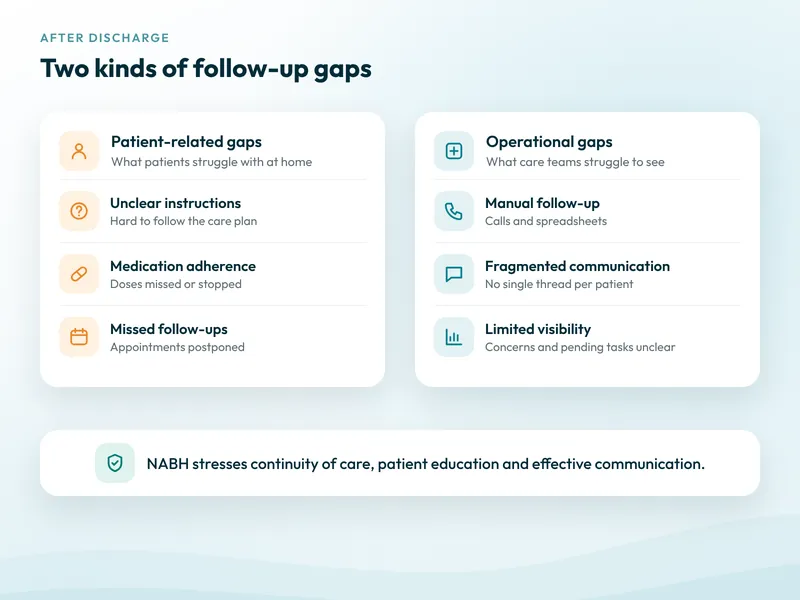
This creates two important gaps:
- Patient-related gaps: Difficulty understanding instructions, medication adherence and missed follow-up appointments.
- Operational gaps: Manual follow-up, fragmented communication and limited visibility into patient-reported concerns.
NABH addresses these broader responsibilities through standards that emphasise continuity of care, patient education and effective communication.
What the NABH Standards Say About Patient Follow-Up
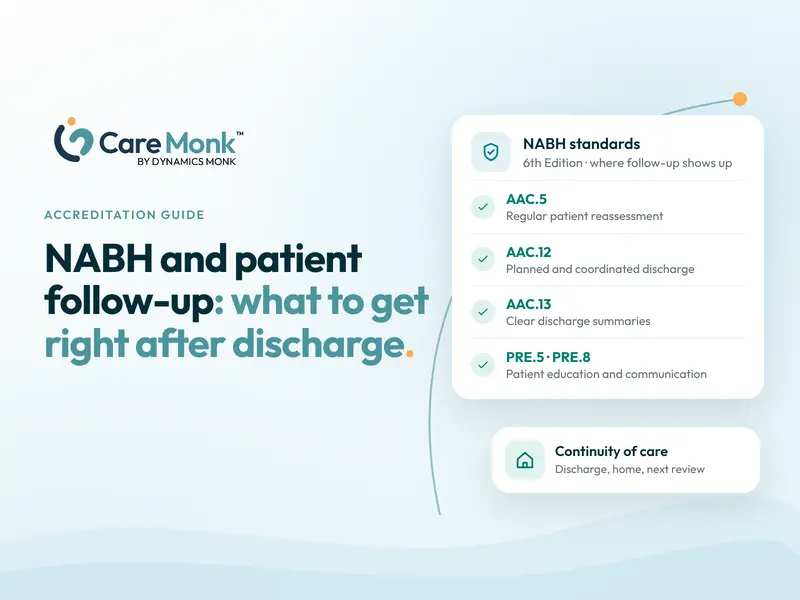
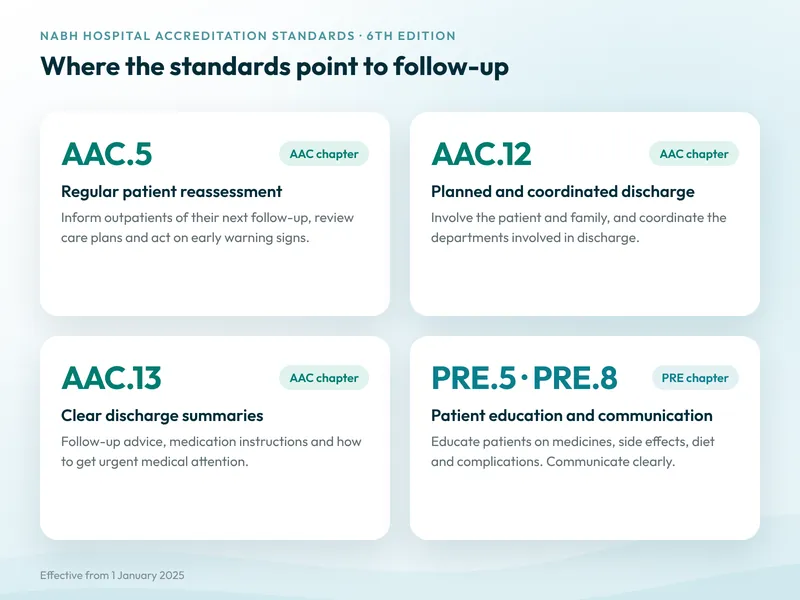
The NABH Hospital Accreditation Standards, 6th Edition, provide relevant direction through the Access, Assessment and Continuity of Care (AAC) and Patient Rights and Education (PRE) chapters.
1. AAC.5: Regular Patient Reassessment
AAC.5 requires hospitals to reassess patients at appropriate intervals to evaluate their response to treatment and plan further care or discharge.
Relevant expectations include:
- Informing outpatients about their next follow-up, wherever appropriate.
- Monitoring and modifying inpatient care plans when necessary.
- Documenting clinical reassessments.
- Identifying early warning signs of clinical deterioration and initiating appropriate intervention.
What hospitals need to do: Establish defined reassessment processes, document clinical observations and ensure that responsibilities for responding to patient concerns are clear.
2. AAC.12: Planned and Coordinated Discharge
AAC.12 focuses on establishing a discharge process that involves the patient and/or family and coordinates the activities of relevant departments.
It also addresses discharge summaries, discharge timelines and continual improvement. The standard further refers to extending access to healthcare practices through domiciliary visits, wherever applicable.
What hospitals need to do: Treat discharge as a coordinated clinical process rather than an administrative handover. Patients and caregivers should understand the next steps, including medication, wound care, investigations and follow-up requirements.
3. AAC.13: Clear Discharge Summaries
AAC.13 addresses the standardised content of discharge summaries, including follow-up advice, medication instructions, relevant care instructions and information about obtaining urgent medical attention.
What hospitals need to do: Ensure that discharge instructions are understandable and actionable. Patients should know when to return, how to follow their medication schedule and when to seek medical attention.
4. PRE.5 and PRE.8: Patient Education and Communication
PRE.5 focuses on educating patients and families about medication use, possible side effects, diet, nutrition, complications and infection prevention.
PRE.8 addresses effective communication between hospitals and patients or their families.
What hospitals need to do: Use understandable language, provide appropriate counselling and establish communication processes that help patients raise concerns and receive relevant guidance. Communication should also respect patient consent, preferences and confidentiality.
Common Gaps in Post-Discharge Patient Follow-Up
Even hospitals with documented discharge policies can face challenges when implementing follow-up processes consistently.
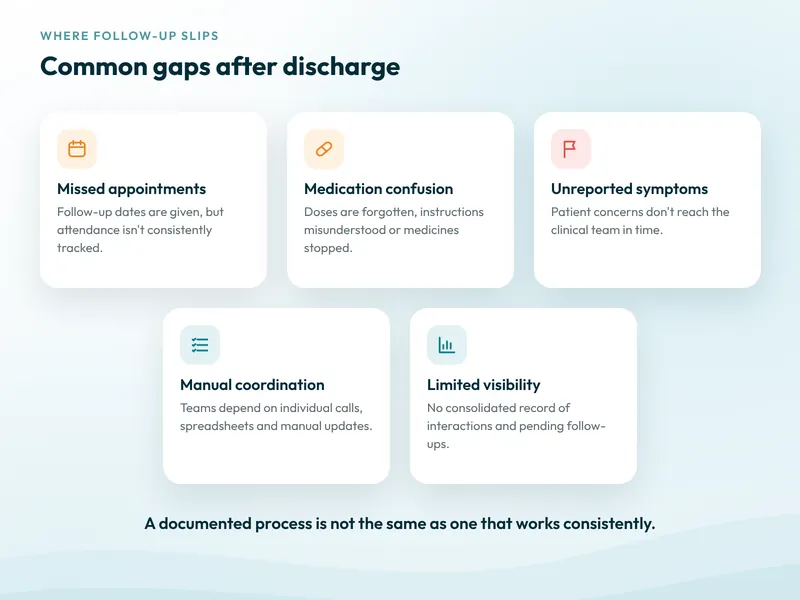
Some common gaps include:
- Missed appointments: Follow-up dates are provided, but attendance is not consistently tracked.
- Medication-related confusion: Patients forget doses, misunderstand instructions or stop medication without consulting their doctor.
- Unreported symptoms: Patient concerns may not reach the appropriate clinical team in time.
- Manual coordination: Nursing and coordination teams depend on individual calls, spreadsheets and manual updates.
- Limited visibility: Hospitals struggle to maintain consolidated records of patient interactions and pending follow-up activities.
These challenges highlight the difference between having a documented process and ensuring that it works consistently.
How Hospitals Can Build a Structured Follow-Up Process
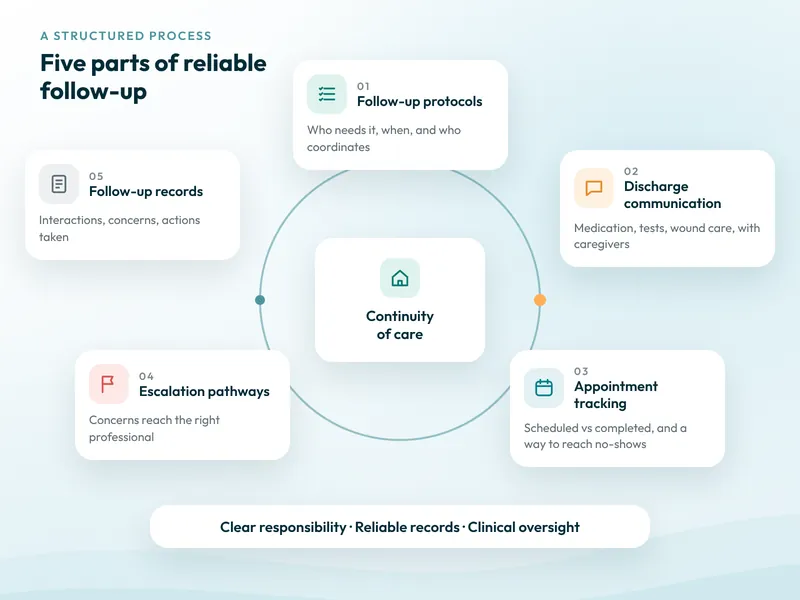
Addressing these gaps requires defined responsibilities, reliable documentation and appropriate clinical oversight.
Hospitals can strengthen their processes by:
Establishing follow-up protocols: Define which patients require follow-up, when contact should take place and who is responsible for coordinating it.
Improving discharge communication: Provide clear instructions covering medication, appointments, investigations, wound care and recovery requirements. Involve caregivers wherever appropriate.
Tracking appointments: Maintain records of scheduled and completed consultations, including a process for contacting patients who miss appointments.
Creating escalation pathways: Define how patient-reported concerns are reviewed and directed to the appropriate healthcare professionals.
Maintaining follow-up records: Document patient interactions, reported concerns, pending activities, escalations and actions taken.
These measures help hospitals move towards a more consistent and accountable approach to continuity of care.
How Digital Follow-Up Can Support Hospitals
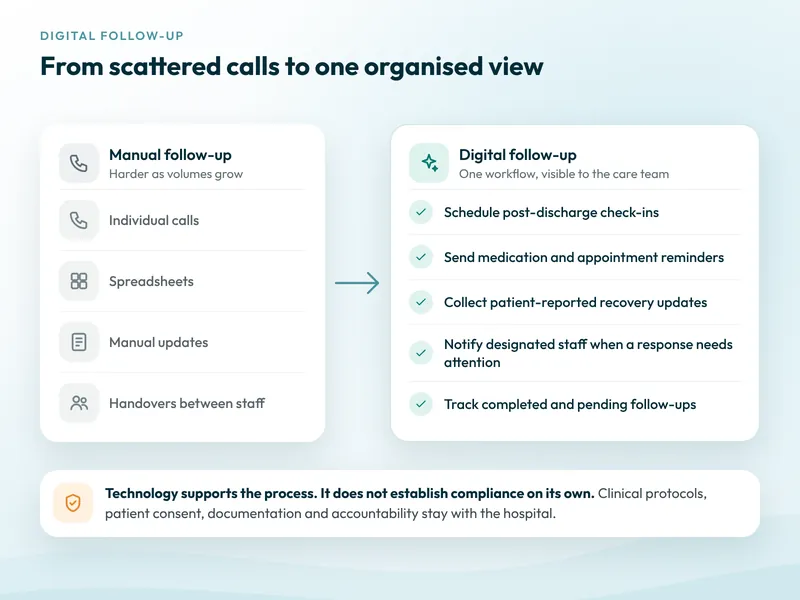
Managing patient communication through manual calls and spreadsheets becomes increasingly difficult as patient volumes grow.
Digital follow-up systems can help hospitals organise communication, schedule reminders, collect patient responses and maintain visibility into pending interactions.
For example, hospitals can use digital systems to:
- Schedule post-discharge check-ins.
- Send medication and appointment reminders.
- Collect patient-reported recovery updates.
- Notify designated staff when a response requires attention.
- Track completed and pending follow-up activities.
These capabilities can support the operational implementation of relevant NABH expectations. However, technology alone does not establish accreditation compliance. Hospitals must maintain appropriate clinical protocols, patient consent, documentation and accountability.
How CareMonk Supports Post-Discharge Care
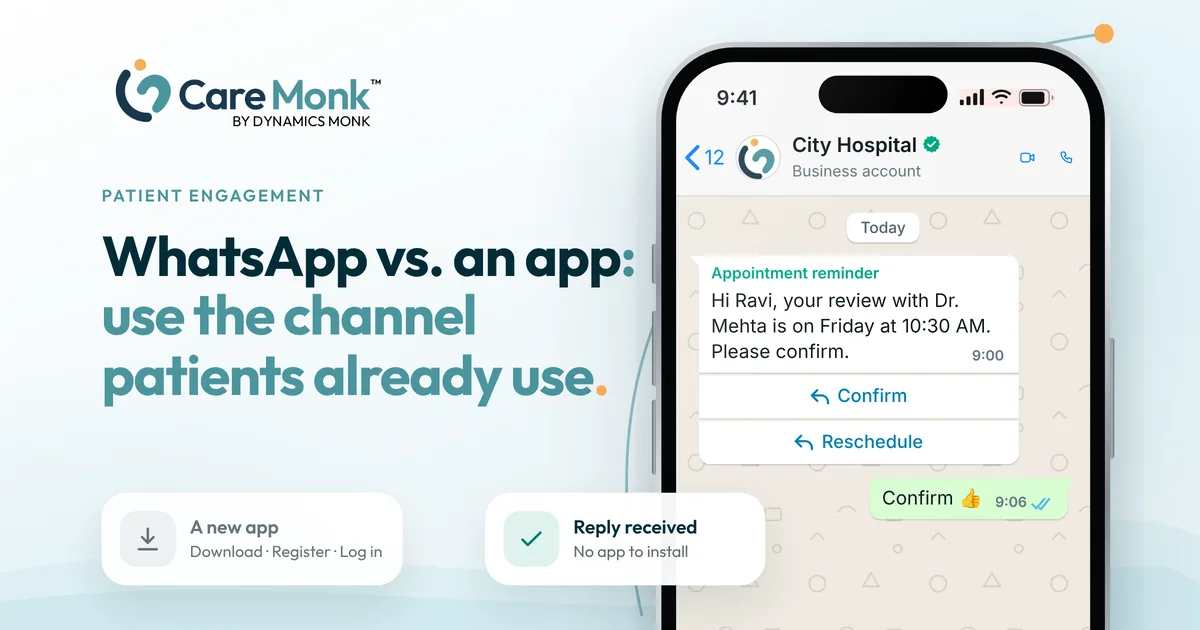
CareMonk, from Dynamics Monk, helps hospitals and clinics maintain communication with patients after discharge through WhatsApp, without requiring patients to download another application.
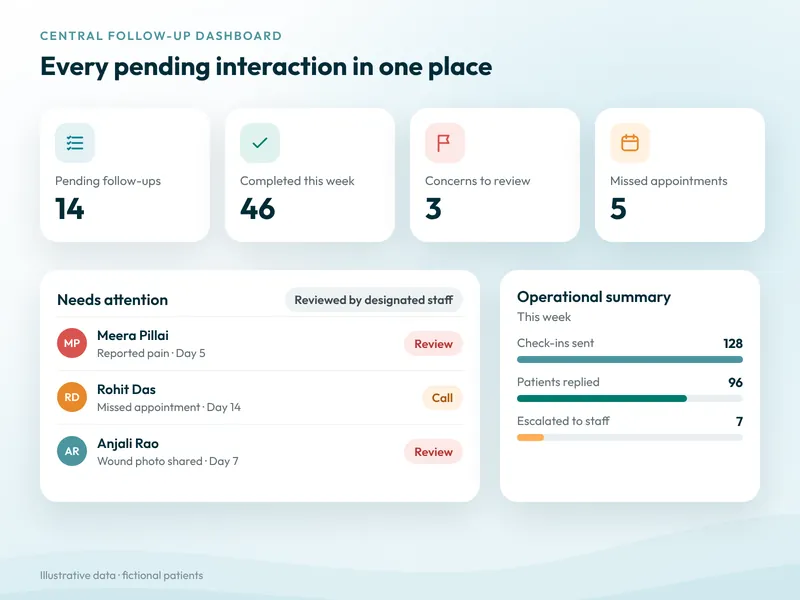
Its capabilities include scheduled follow-up check-ins, medication and appointment reminders, patient-reported updates, wound image sharing for review by designated personnel, and a central dashboard for tracking pending interactions and patient concerns.
Care teams can also access operational summaries to monitor follow-up activities and identify areas requiring attention.
CareMonk is not an EMR, diagnostic tool or emergency-response service. It does not diagnose patients or independently make clinical decisions. Patient-reported information is reviewed by designated healthcare personnel, with clinical escalation remaining the responsibility of the hospital's care team.
By organising post-discharge communication and follow-up activities, CareMonk helps hospitals maintain better visibility into patient engagement after discharge.
Moving From Discharge Documentation to Continuity of Care
NABH accreditation is not simply about maintaining policies, completing forms or preparing documents for an assessment. It is about establishing processes that support safe, coordinated and patient-centred healthcare.
For hospitals, the responsibility extends beyond providing discharge instructions. Patients need to understand their care plans, attend recommended follow-ups and have an appropriate channel to communicate concerns.
A structured post-discharge process helps connect these activities, giving healthcare teams better visibility and patients clearer guidance during recovery.
See how CareMonk keeps in touch after discharge.
A short walkthrough of how WhatsApp follow-ups, escalation and closure reports would work for your hospital.